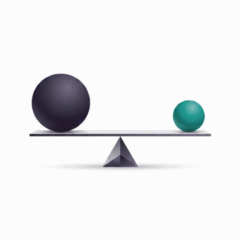
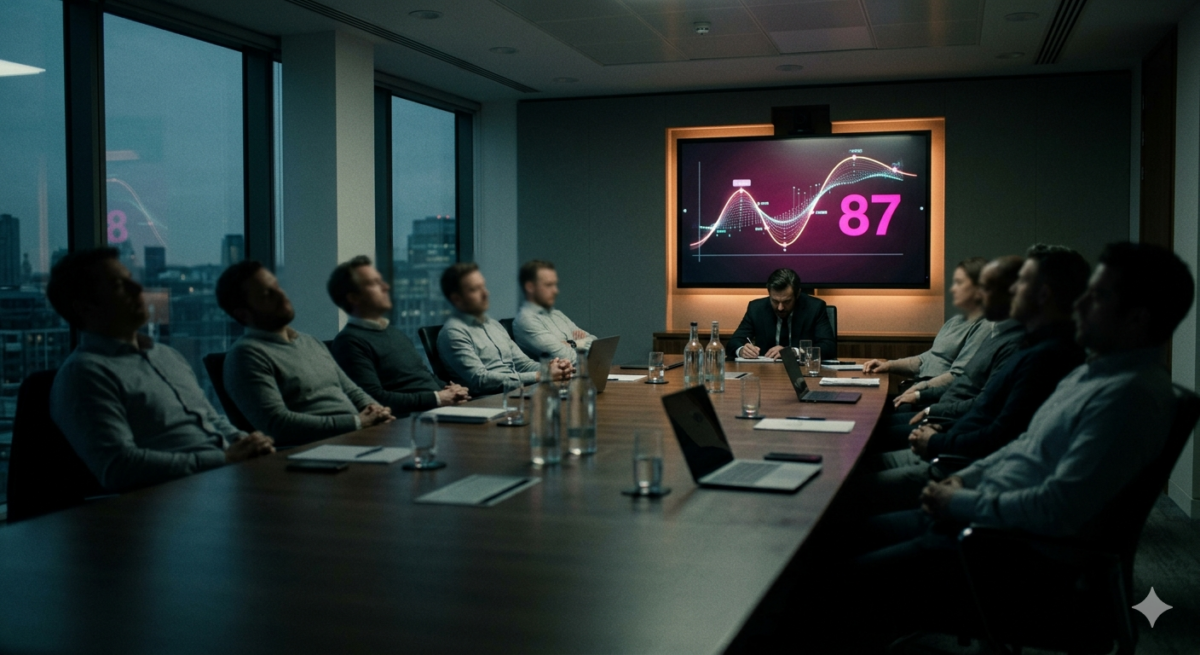
The fourth untaught skill. The one that comes after you learn to see clearly, learn to commit, and learn to be wrong well. It’s about knowing which decisions a human must keep their hands on now that the machine wants to make them for you — and it may be the last skill left that’s genuinely worth paying a person for.
This is the long-form companion to the fourth piece in a series. The shorter version lives on Medium. The earlier three: getting fired three times before I learned to think like a leader; almost getting fired again when a board member named Marcus exposed the second skill; and the $1.4M decision I got wrong in front of the board. You can read this one cold. It just lands harder with the others behind it.
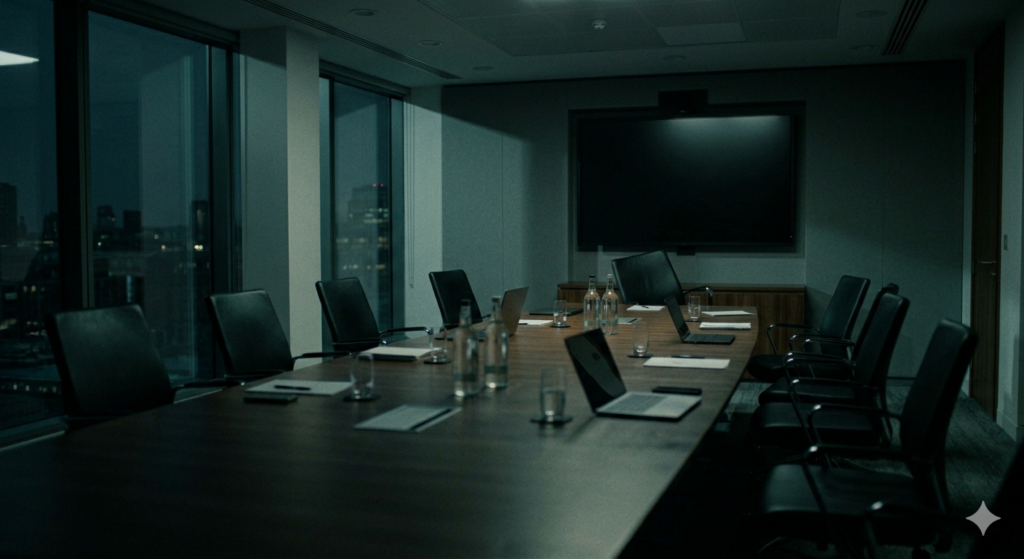
Tuesday. 2:47 in the afternoon. A conference room that smelled faintly of someone’s microwaved lunch, because glamour is not a real thing that happens at work.
On the screen: a recommendation. Kill the legacy product line. Beside it, a number in a confident shade of blue. 94% confidence. A projected annual saving of just over three million dollars.
Around the table, eleven people had already relaxed.
You can feel that in a room. The shoulders drop. Pens get capped. Someone is already half-turned toward the door in their mind, mentally back at their desk. The decision had a number on it, and the number had decimal places, and decimal places feel like truth.
I was the one person who hadn’t relaxed. And I couldn’t have told you why for at least thirty seconds, which is an uncomfortable amount of time to sit in a room full of people waiting for you to nod.
I want to be careful here, because the easy version of this story is a lie. The easy version is: brave human distrusts cold machine, machine is wrong, human is vindicated, applause. That’s not what this is. The model in that room was very good. It was better than the analyst it replaced, and the analyst it replaced was better than me at the thing the model now did. I am not anti-model. I bought the model. I championed the budget for the model.
What I learned that Tuesday was narrower and stranger than “trust your gut.” It was this: there is a specific kind of decision that you must never let the thing that computed it also own. And almost nobody is teaching the difference, because until about five minutes ago we didn’t need to.
The thing nobody prepares you for
The higher you climb, the more your hardest decisions arrive pre-answered.
Not by a person you can argue with across a table. By a system that has been right often enough, recently enough, that disagreeing with it feels less like leadership and more like ego. You stop being the one who finds the answer. You become the one who is handed an answer and asked, with everyone watching, to either bless it or be the difficult person who didn’t.
Nobody warns you that this is the shape the job takes near the top. You spend fifteen years learning to produce good answers, and then you arrive somewhere the answers are already produced, and the entire game quietly changes underneath you into something else. Something they never named in any training I sat through.
It took me two failures to see it. One where I held a call I should have held. And — the one I’d rather not write about — one where I waved through a call I should have stopped.
What the model couldn’t see
Back to the Tuesday. Let me tell you what the recommendation didn’t know.
The legacy line it wanted dead was a small, unglamorous product we’d sold for years at almost no margin. On a spreadsheet it looked like exactly what it was. A drain. Three million a year we were lighting on fire for reasons no current dashboard could explain.
But I’d had dinner, eight months earlier, with the procurement head of our second-largest customer. Halfway through a plate of mediocre sea bass he said something offhand. Not a contract clause. Not a data point. A man relaxing, telling me the reason his company stayed with us — through two price rises and one genuinely embarrassing outage — was that we were the only supplier who still made the old thing his factory floor refused to give up.
That sentence was not in the training data. It could not be. It lived in a restaurant, in a tone of voice, in the specific way he glanced at his phone and then decided not to check it.
The model had optimised a line item. What it could not see was that the line item was a thread, and the thread was stitched through forty million dollars of relationships that had nothing to do with the product itself.

In the second piece in this series I told you that “it depends” is the most expensive sentence in white-collar work, the one that gets you passed over. I stand by it. But here’s the inversion that took me years to feel: the machine has the opposite disease. The machine is never uncertain when it should be. It hands you 94% on a question where the honest answer is “this depends on a dinner I had in March.”
The model never says “it depends.” That isn’t a strength. It’s the whole danger.
Custody of the call
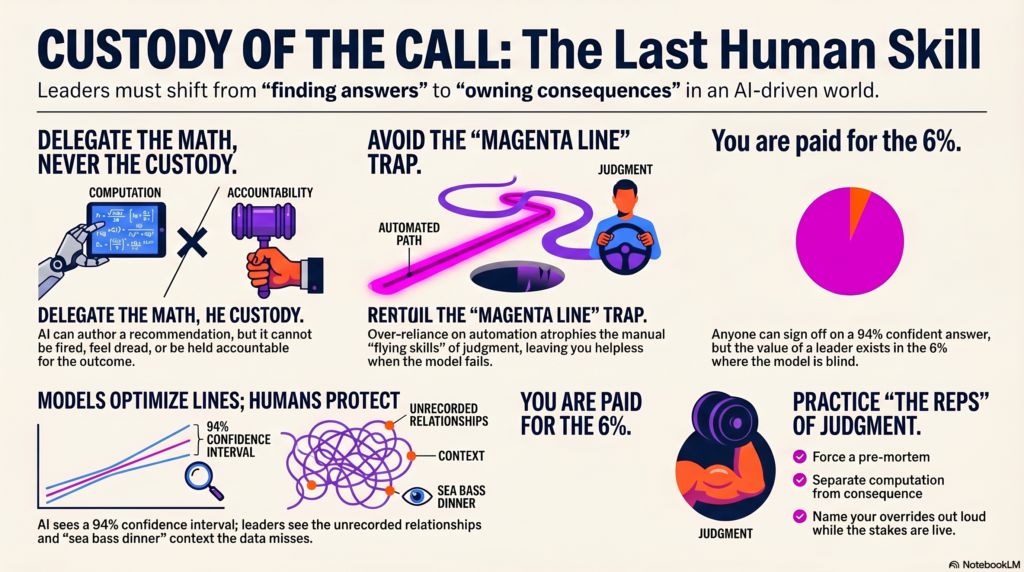 Here’s the phrase I’ve ended up using for what was missing in that room. Not who computes the answer. Who holds custody of the call.
Custody is not authorship. The model authored the recommendation, and it did a cleaner job than any analyst I’ve managed. Custody is something else. Custody means: when this decision gets acted on, and the consequences land on real people, whose name is on it. Who answers for it. Who lies awake.
You can delegate the authorship. Delegate the maths, the modelling, the forecast, the first draft, the second draft, the analysis that would have taken a team of six a fortnight in 2015. Hand all of it over. None of that is the job anymore, and pretending it is will get you automated.
You can delegate the math. You cannot delegate the custody.
The moment you forget that distinction — the moment you let the thing that produced the answer also own the answer — you’ve stopped being a leader and started being a router. A person who passes the confident output along to whoever’s next.
And here is the quiet, brutal economics of the next ten years. A router is optional. The model can route to the next person as easily as it routed to you. The only role that survives is the one holding custody, because custody is the exact thing the machine cannot take. It cannot be accountable. It cannot be fired. It cannot have dinner with the procurement head. It cannot feel the dread I felt at 2:47, which, as it turned out, was information arriving in the only format that particular truth had available.
The new way to lose your career isn’t being wrong. It’s being optional.
The call I waved through
I said there were two failures. Here’s the one that earned me the right to the first.
Two years before the Tuesday, different company, I had a stack of candidates to get through and not enough hours. We’d started using a screening tool that scored applicants and ranked them. It was a good tool. It saved real time, and the time it saved was time I genuinely did not have.
There was a name near the bottom of the ranked list. I remember it was near the bottom because I remember the Post-it I stuck on my monitor and then ignored. The tool had scored her low. Thin on the keywords, an odd CV, a couple of gaps, a degree from somewhere the model had presumably never seen rate well. I had eleven other things on fire. I deferred to the score. I did not call her. I hired the candidate the tool loved, who interviewed beautifully and had every legible signal you could want.
The one I didn’t call went to a competitor. Within eighteen months she was the person quoted in the trade press, the one running the thing we wished we’d built. The candidate the tool loved was gone inside a year, perfectly pleasant, quietly hopeless at the part of the job that no CV measures.
I didn’t get that wrong because the tool was bad. The tool did precisely what it was built to do. It scored the legible and was blind to the illegible, which is the only part that mattered, and I let the score be the decision instead of an input to a decision I never actually made. I routed. I held custody of nothing. The cost didn’t show up on any dashboard, because the cost was a person who became someone else’s competitive advantage, and you don’t get a notification for that.
That’s the failure that taught me the Tuesday. Not the time the machine was wrong. The time it was doing its job correctly and I mistook its output for my judgment.
Children of the magenta line
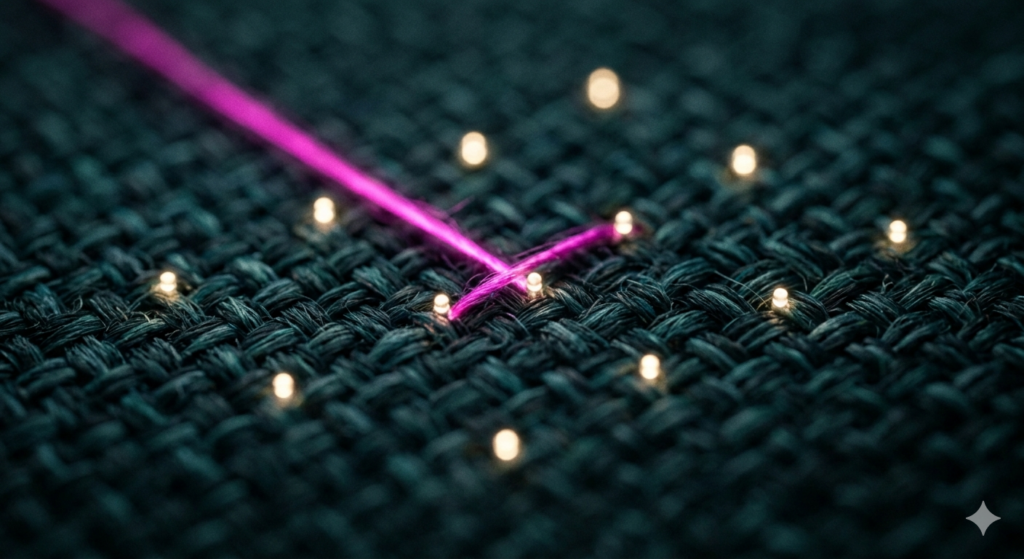 There’s a training talk that used to circulate among commercial pilots. An American Airlines captain named Warren VanderBurgh gave it, and the phrase that stuck was “children of the magenta line” — the magenta line being the route the flight computer draws on the cockpit display. His argument, delivered to rooms full of people far more disciplined than any boardroom, was that automation had quietly made pilots worse. Not lazier. Worse. They’d grown so good at managing the computer that they’d gone rusty at the actual flying, and the rust only showed at the precise moment the automation gave up and handed control back. Usually in the worst weather. Usually with the ground coming up.
If you want the version that ends in the Atlantic, read about Air France 447. The short, awful summary: the airspeed sensors iced over, the autopilot did the responsible thing and disconnected, and it handed the crew a perfectly flyable aeroplane. They flew it into the ocean. Not because they were stupid. Because the muscle that flies the plane when the magenta line vanishes had quietly wasted away from disuse, and it wasn’t there in the ninety seconds they needed it.
There’s an older idea underneath VanderBurgh’s, and it’s worth knowing because it predicts our whole decade. In 1983 a researcher named Lisanne Bainbridge published a paper called Ironies of Automation. Her point was almost cruel in its simplicity. When you automate a system, you automate the easy parts first, because the easy parts are easiest to automate. What’s left for the human is the hard residue: the rare, the ambiguous, the genuinely novel. So you take a person, strip away all the routine practice that used to keep them sharp, and then summon them only for the hardest moments of all — moments they’re now less prepared for than ever, precisely because the machine has been handling everything that would have kept them in shape.
Read that again with your own job in your head. We are automating the easy calls. We are leaving humans only the hard ones. And we are removing the daily reps that used to make anyone fit to make a hard one. That is the trap, and “children of the magenta line” is just its name in a cockpit. In an office it doesn’t have a name yet. That’s part of why it’s dangerous.
Automation didn’t make pilots safer. It made them worse at the one moment that mattered.
Read that twice if you work in an office. It’s about you now.
If you’d rather hear this one out loud, I walked through the whole call on video.
The failure mode nobody mentions: when custody curdles into ego
Now the part most essays about “trusting your judgment over the algorithm” conveniently skip, because it ruins the hero arc.
For every router who blesses every output, there’s a cowboy who overrides everything to feel important. And the cowboy does far more damage, because he dresses vanity up as judgment and calls it leadership. He overrides the model on the reversible, low-stakes, well-measured calls where the model is plainly better, because overriding feels like authority and signing off feels like submission. He is not holding custody. He is performing it.
So there are three people in that boardroom, not two.
The router overrides nothing. He is optional and doesn’t know it yet.
The cowboy overrides everything. He is expensive and thinks he’s indispensable.
The custodian overrides almost nothing, signs off fast on the calls the machine should own, and spends all of his scarce override capital on the two or three decisions a year where being wrong is irreversible and the data is blind. He looks, most of the time, exactly like the router. The difference only shows on the Tuesday.
Here’s the tell I use on myself, and it’s uncomfortable. Do I override more when I’m being watched? If the answer is yes — if my disagreement spikes in the meetings with the board in the room and vanishes when it’s just me and a spreadsheet — then I’m not exercising judgment. I’m performing it. Real custody is quiet and selective and frequently invisible. Ego is loud and indiscriminate and always has an audience.
I have been the cowboy. I’d love to tell you I learned custody and never relapsed. Not true. I caught myself eighteen months ago overriding a perfectly good pricing recommendation, and when I was honest about why, the reason was that a younger colleague had built it and I wanted the room to remember whose call it was. That’s not judgment. That’s insecurity with a corner office. I signed the recommendation. It was right.
Which calls to keep, and which to hand over
“Hold custody of the important ones” is useless advice without a way to tell which ones those are at 2:47 on a Tuesday, with eleven people waiting. So here is the actual filter I run. Not a feeling. A checklist I can apply under pressure.
Keep custody when the decision is irreversible. One-way doors. You can hand the machine every reversible call you have, because a reversible mistake is just a fast lesson. An irreversible one is your name on a headstone. Killing the product line was close to a one-way door — you don’t quietly resurrect a discontinued product after the customers have re-tooled around its absence.
Keep custody when the data is thin or a proxy. The model is only ever as good as the territory its map was drawn from. When the real thing that matters — trust, loyalty, morale, a factory floor’s stubbornness — has to be smuggled into the model as some thin numeric stand-in, the map and the territory have come apart, and only a human who’s walked the territory knows by how much.
Keep custody when the value lives off the spreadsheet. Relationships. Reputation. The reason someone stays through an outage. If the thing at stake is the kind of thing said over sea bass and never written down, the model is structurally blind to it, and structurally blind is not the same as neutral.
Keep custody when the downside is asymmetric. Small, capped upside and a long, ugly tail of catastrophic downside is exactly the shape where a 94% confidence is most seductive and most lethal. Ninety-four percent is wonderful until you’re standing in the six.
Keep custody when legitimacy is at stake. Some calls aren’t about what’s optimal. They’re about who we are, and whether the people affected will accept the decision as fair. A model can tell you the efficient layoff. It cannot tell you whether the company survives the way you did it. That’s custody, and it’s not delegable to anything that can’t be held responsible.
And the inverse, said plainly so you don’t become the cowboy: hand it over when the call is reversible, frequent, well-instrumented, low-stakes, and the error is cheap and symmetric. There, your override isn’t judgment. It’s friction. Sign it and move on. The faster you sign off on the calls the machine should own, the more credibility you keep for the day you need to stop the room.
Automate the reversible. Hold the irreversible. And never let the thing that computed the answer be the thing that’s accountable for it.
The reps
Skills don’t transfer through admiration. You don’t get them by nodding at an essay. You get them by repetition, ideally long before the Tuesday that counts. These are the ones I run.
Rep one — make the model argue against itself. Don’t ask “is this right.” Ask “what would have to be true for this to be wrong.” Force the premortem. If you cannot articulate the conditions under which the recommendation fails, you don’t have custody of it. You have a hostage situation, and you’re the hostage. The system that cannot imagine its own failure is exactly the one you must imagine it for.
Rep two — two columns, in your own words. Left: what the analysis says. The machine wins that column, always, and you should let it. Right: what breaks, and who it breaks on, if we act and the analysis has missed something. The machine cannot write the right column, because the right column is made of people and the machine has never met one. Write it by hand, in your own bad phrasing. The clumsiness is the proof it’s yours.
Rep three — name the override out loud, before you know the outcome. The one everyone skips, and the one that builds the authority. In the room: “I’m holding this one. Here’s the specific thing I’m seeing that the model can’t, and here’s exactly what I’ll have been wrong about if this goes badly.” Said before the result is in. Not after, when it’s safe and free. In the third piece in this series I said the most powerful four words I’d ever used were “I was wrong, here’s what I now think.” This is the same muscle, run forwards instead of back. Both are custody, spoken aloud, while the stakes are still live.
Rep four — keep flying the plane by hand. Once in a while, make a call without opening the model. Decide first, then check yourself against it afterwards. Not because your unaided guess is better — it usually isn’t — but because the only way to keep the muscle that works when the magenta line vanishes is to use it on a calm day. Pilots practise stalls in clear skies on purpose. Do the office equivalent before the weather comes in.
Rep five — audit your own override rate. Keep a quiet log. Every time you overrode the recommendation, and whether, months later, it mattered. The distribution tells you who you are. Override nothing and you’re a router. Override everything and you’re a cowboy. The custodian’s log is mostly blank with a few entries that, in hindsight, saved something that couldn’t be rebuilt. If you can’t remember the last time you held a call, that’s not discipline. That’s drift.
Don’t make a junior your crumple zone
There’s a failure that happens one level up, when organisations try to “keep a human in the loop” without understanding what custody actually requires, and it’s worth naming because well-meaning leaders walk straight into it.
A researcher named Madeleine Clare Elish described something she called the moral crumple zone. When an automated system makes a decision and it goes wrong, blame tends to collapse onto whatever human happened to be nearest the controls, even when that human had no real power to change the outcome. They become the crumple zone — the soft human body that absorbs the impact so the system’s reputation survives intact.
I have watched companies do this on purpose without realising it. They put a junior analyst on the “approve” button so there’s technically a person in the loop, give them no authority to actually say no, no time to interrogate the output, no cover if they push back. Then, when the confident answer turns out to be the catastrophic six percent, the junior is the name in the post-mortem. That is not keeping a human in the loop. That is manufacturing a scapegoat and calling it governance.
Custody only means anything if it sits with someone who has the power to stop the room and the standing to survive being wrong about it. If the person holding the button can’t say no without losing their job, you don’t have custody. You have a crumple zone wearing a lanyard. Real custody costs the organisation something. It has to, or it isn’t custody.
What I actually did, and what it cost
Back to the Tuesday. I’d love to tell you I had a speech. I had about four minutes and a dry mouth.
What I’d learned, mostly from getting it wrong, was not to override on a feeling. A feeling sounds like ego in a boardroom, and a boardroom is right to distrust it. So I didn’t say “I have a gut sense.” I said something close to this:
“The model’s optimising the product. I think the product is a proxy for a relationship the model can’t see. Before we kill it, I want one number it doesn’t have — the revenue at risk across the three accounts that buy it as part of a bundle. If that number’s small, I’ll sign this myself, today.”
That’s it. No heroics. I didn’t reject the machine. I asked the single question that would tell me whether the machine had been answering the right question at all.
The number came back two days later. The revenue genuinely at risk — relationships that traced back, however loosely, to that unprofitable little line — wasn’t three million. It was closer to thirty-one.
We kept the product.
Now the honest part, the part I’d cut if I were trying to sound like a genius. I cannot fully prove I was right. Maybe those customers would have stayed regardless. Fourteen months on, one of them signed a much larger contract and their CTO, unprompted, mentioned the old product as a reason they trusted us. Soft proof. The softest. I’ll take it, and I won’t pretend it’s clean.
Because here’s the lesson, and it isn’t flattering: custody isn’t about being right. It’s about being the one who answered for it. I held the call. If those thirty-one million had walked, it would have been my name in the post-mortem, not the model’s. That’s the job. That has always been the job. AI just stripped away everything else the job used to involve and left this one part standing in the middle of the room, naked and obvious, where for years it had been comfortably hidden under a pile of work that machines now do better than we ever did.
The cost had a face. The analyst who’d built the model — I’ll call her Dani, because she’ll read this — had given it three weeks. It was good work. When I questioned the recommendation she heard it, for a few days, as a verdict on her. It wasn’t. I had to sit on the edge of her desk and say, badly, that the model was excellent and was answering a smaller question than the one we were paid to answer, and that those were different things, and the second one was mine to get wrong, not hers. She’s better at this than I am now. That conversation was the most useful thing I did all quarter, and it wasn’t close.
Anyone can sign off on a 94% answer. They pay you for the 5%.
The room, again
2:47. The capped pens. The smell of someone’s lunch. The eleven relaxed people and the one who wasn’t.
I know now what the dread was. It wasn’t doubt about the model. The model was fine. The dread was the bodily knowledge that everyone in that room was about to treat a 94% number as a decision — and that a decision is not a number, and that the gap between those two things was about to become my entire job description for whatever was left of my career.
The machines are going to get more confident, not less. The numbers will grow more decimal places. The blue will get more reassuring. The rooms will relax faster and earlier and more completely than that one did. Every one of those moments is an invitation to become optional. To route. To drift down the magenta line until the day it disconnects and hands you the controls over open water, and you find out whether you kept the muscle or quietly let it waste away while the autopilot flew.
Don’t take the invitation.
Hold the call. Put your name on it. Be the one who can still fly.
That’s the skill. No college teaches it. No model will ever have it. And it’s about to be the only one left that’s genuinely worth paying for.
This is part four of a series on the skills no one teaches you and AI can’t replace. If it was useful, the two it’s built on are where I’d send you next: the second skill, on learning to commit when the data won’t decide for you, and the third, on how being wrong in front of the board became a promotion. And if the writing earns it, you can keep me doing it at ko-fi.com/AFulcrum.
Across the ecosystem: read the sharper version on Medium, or watch it on YouTube.