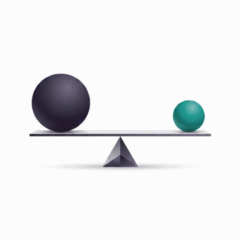

A rented mind never really rests. The going rate for calm is $200 an hour. Marcus Aurelius wrote the manual in a tent, on campaign, and never charged a soul. Some debts never show up on a statement. This is one of them.
A shorter version of this ran on Medium, and there’s a video walkthrough on YouTube if you’d rather watch it than read it.
Three o’clock in the morning. Awake again.
My hand was already reaching for the phone before my eyes had properly opened, the way it does, the way yours probably does. Not to check anything urgent. Not to read a message that couldn’t wait until sunrise. But to be soothed. To have the cold, echoing silence filled by something, anything, so I didn’t have to lie there alone in the dark with my own head.
Somewhere in that involuntary reach, a sudden realization landed on me like ice water. I had spent the entire week paying, in one form or another, to feel calm. A subscription fee for a guided meditation app. A therapist whose going rate, where I live, runs about two hundred dollars an hour. A bedside stack of self-help paperbacks promising to “quiet your overthinking mind”—all purchased, none finished. I was renting peace by the month, and the lease never ended.
Here is the truth nobody prints on the invoice: You are paying rent on a mind you were born owning.
That is what I have started calling it, because once you notice the mechanism, you cannot unsee it: the rented mind. You lease your own psychological stability back from companies and experts who are extraordinarily good at ensuring the payments never stop. The app. The coach. The two-hundred-dollar hour. The next bestseller. Miss a payment, drop the routine for three days, or step outside the paywall, and the anxiety walks straight back through the front door. Why? Because you never actually owned the calm in the first place. You were only ever a tenant.
I. The Architecture of the Freehold

There is another way to hold your internal life. Where I am from, we would describe it as the difference between leasehold and freehold.
- Leasehold means you pay and pay for decades, but you never own the ground under your feet.
- Freehold means the property is yours, full stop, and no one can ever send you a bill for standing on it.
Most people hold their sanity on a precarious leasehold. The entire project of a life worth living is buying the freehold on your own head.
Which is where the dead come in.
Marcus Aurelius ran the largest, most volatile empire on earth and still couldn’t sleep. We know this not from official court biographies, but because he wrote himself private notes to cope—sitting in a military tent, on campaign along the frozen Danube, surrounded by war and contagion. He never intended for a single human being to read them. What we now buy in polished paperbacks as Meditations was not “content.” It was not a product. It was a man refusing the rented mind, buying his own head back one midnight entry at a time, for absolutely nothing.
“Nowhere can man find a quieter or more untroubled retreat than in his own soul… Constantly then grant yourself this retreat, and renew yourself.”
— Marcus Aurelius, Meditations
And that famous line everyone slaps on t-shirts—“Know thyself”? It didn’t start with Aristotle or modern self-help gurus. It was carved into the stone doorway of the Temple of Apollo at Delphi centuries before any philosopher you can name was born. The oldest advice in Western civilization is not a productivity system or a 10-step monetization funnel. It is an uncompromising instruction to find out who you actually are—and it came with no upsell.
So I stopped paying rent. Here is what buying the freehold actually looks like in daily reps—none of which cost a dime.
II. The Ten Repetitions of Mindful Sovereignty
1. Read the Dead, Not the Trending

New books tell you what is anxious this week. Old books tell you what has held firm through plague, exile, economic collapse, and the fall of empires. Seneca, Epictetus, Montaigne, Schopenhauer: none of them wrote for algorithmic reach or newsletter click-through rates. They wrote to survive realities far harsher than yours will ever be. An idea that has survived two thousand years has been stress-tested by reality itself. The bestseller list is just this quarter’s weather.
2. Walk with Nothing in Your Ears
No podcast. No audiobook. No music. Your sharpest, most original thinking has never once arrived while you were topping up on someone else’s opinions. It arrives when you are bored, moving, and unsupervised. Leave the phone at home, not just in your pocket—because in your pocket, its potential buzz still controls your nervous system. The walk isn’t physical exercise; it’s cognitive drainage, where your own voice finally gets a word in.
(If you want to actually track whether it’s working instead of just hoping, I built a 30-Day Cognitive Rest Tracker for measuring the return of original thought, day by day.)
3. Write to Find Out What You Think
Not to publish. Not for an audience. Aurelius wasn’t journaling for a like or a subscriber count. Writing is not merely how you record a thought you already had—it is how the thought gets forged in the first place. If you cannot put your 3 AM dread into clear sentences, it remains formless. And formless things run you. Give it grammatical shape on paper, and you can look at it objectively. Most haunting anxieties shrink the moment they are forced to stand still in ink.
4. Buy Back One Hour of Silence
Blaise Pascal noted three and a half centuries ago that all of humanity’s trouble stems from our inability to sit quietly in a room alone. He was right, and modern technology has weaponized that weakness. We drown every buffer: podcasts while walking, YouTube videos while eating, social media scrolls at every red light. A silence you cannot endure is a psychological debt you keep servicing. Turn notifications off permanently. If it is a genuine life emergency, they will call. Everything else is someone renting a slice of your life without permission.
5. Rewrite the Script You Didn’t Choose
Epictetus, born a slave in the Roman Empire, put it plainly: we are disturbed not by things, but by the judgments and narratives we form about those things. “I’m bad with money.” “I’m an anxious person.” “It’s too late for me.” You didn’t discover those truths; you inherited them, absorbed them from stressed parents or noisy culture, and now you read them back to yourself like weather reports. They aren’t facts. They are scripts. Catch one in real-time, and ask who wrote it—because it almost certainly wasn’t you.
(I turned this exact gap into a 21-day drill — The Flinch Gap — for anyone who wants reps, not just the theory.)
6. Rehearse the Loss (Premeditatio Malorum)
The Stoics practiced a deliberate mental exercise: premeditatio malorum—rehearsing what you are terrified to lose before fate takes it. Sit quietly with the stark reality that the noisy toddler, the cramped apartment, the demanding job you complain about, will one day be memories of the past. Someday you would give everything you own for just three minutes of this exact ordinary Tuesday back. This isn’t morbid; it is the fastest known antidote for taking your life for granted. Grief in advance, at a steep discount.
(I built a small instrument around this exact two-column trick — The Proof-of-Effort Audit — to show you which parts of your week are real work and which are just proof you were working.)
7. Say the True Thing
Half of modern anxiety is the exhausting running cost of performing a peace you do not feel. You swallow the disagreement, manage your face to keep others comfortable, play the agreeable diplomat, and then wonder why you are wired and restless at midnight. Bottled truth does not stay fresh; it rots inside you, and you pay for the storage in lost sleep. Say the awkward thing. Say it kindly, but say it plainly. The relief is immediate, and it is free.
(For the version of this that happens in performance reviews and Slack threads, I wrote The Professional Conflict Playbook — scripts for saying the true thing without torching the relationship.)
8. Go Dark Once a Month
Once a month, disappear from the network. Twenty-four to forty-eight hours: no news feeds, no social channels, no incoming content stream. Aurelius called the sanctuary within your mind your “inner citadel.” The point of this retreat isn’t passive rest; it is that when you unplug from collective digital outrage, your actual baseline thoughts return. You remember what you think when nobody is shouting a curated opinion at you.
9. Take Your Hands Off the Wheel
The foundational Stoic move is the one modern culture resists most fiercely: sort the world into what is yours to control and what is not, then abandon the second pile entirely. The outcome, the macroeconomic weather, the market, another person’s opinion of you—none of it belongs to you. The hyper-optimizers who attempt to schedule every minute and control every variable end up the most fragile people in the room, because life’s best moments were never on a spreadsheet.
10. Sit with Someone Forty Years Ahead of You
Next time you get into your car, don’t reach for a podcast to “optimize your commute.” Ring someone old. Ask them what they regret, what turned out not to matter at all, and what they would undo if given a second chance. You are about to pay full price, in irreplaceable years, for hard lessons someone else has already bought and will hand you for the simple cost of listening. That isn’t networking; it is the oldest, purest form of wealth transfer on earth.
III. The Delphic Freehold

None of these practices require a subscription model. That is the point. The rented mind is not cured by finding a kinder, more affordable landlord. It is cured by moving out of the rental ecosystem entirely.
Which brings us back to Socrates, standing trial for his life in Athens. The famous line attributed to him—“I know that I know nothing”—is not quite what Plato recorded. What Socrates actually argued was far subtler: he was wiser than the men around him only because he did not pretend to know what he did not know. That is the whole freehold. Not bulletproof certainty. Not a life free of chaos. But the complete end of needing to fake it. If this sounds like the same rented mind I described in The Borrowed Brain, you are not alone.
Three o’clock in the morning again, sometime last month. Awake, same as ever. My hand instinctively reached for the phone—that muscle-deep reflex built over years of digital conditioning.
This time, I left the screen face down. I lay there in the dark, looking up at the quiet ceiling, with only my own thoughts for company. Nothing filled the silence, and for the first time in years, I let it stay empty.
It was mine. Nobody was billing me for it. And I went back to sleep.
Recommended Further Reading
- The Great Re-Anchoring: Why half of us are quietly going analog in an hyper-digital world.
- I Quit the 5 AM Club and My Career Moved Faster: What Seneca understood about wasted effort and artificial discipline.