Make a fist. Hold it as hard as you can, and don’t let go.
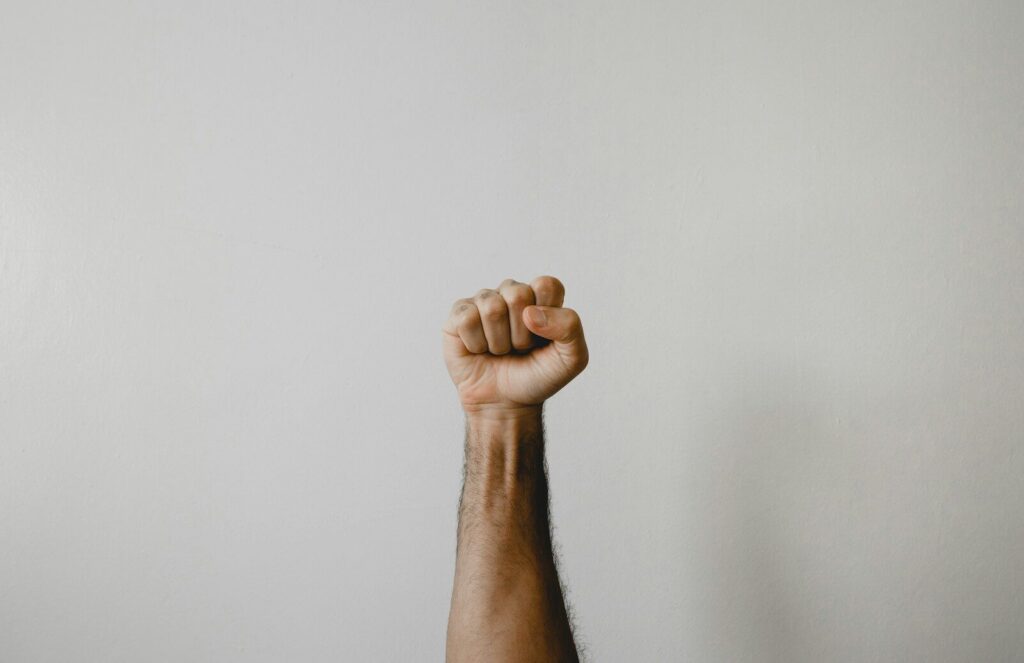
Strong at first. The knuckles go white, the forearm sets, and for a few seconds you’re completely in charge. Then it aches. Then it shakes. Then the fingers start to open on their own, and there’s not much your willpower can do about it. That failing fist is roughly what happens every time you try to break a habit by force — and it says nothing about your character or how badly you want it.
This essay also lives on Medium, and there’s a video version if you’d rather watch. September is when the new-term promises start to fray, so it’s worth ten minutes now.
We’re taught to treat a bad habit like an enemy. Grit your teeth. Delete the app at midnight in a fit of disgust. Pour the good bottles down the sink and swear to the mirror that this time is different. And for a while the fist holds; the first few days of any resolution run on pure conviction.
Then you get tired, the way a muscle gets tired. The car won’t start, the boss sends the kind of email that ruins a Tuesday, the neighbour’s car alarm goes off at two in the morning. The fist shakes, and the habit walks back in through the door you were holding shut.
Here’s the part the 5 a.m. club and the boot-camp crowd leave out: push hard against a habit and it pushes back just as hard. You white-knuckle through a craving, pacing the kitchen, and the craving doesn’t shrink. It waits. You’re holding a spring down with your thumb, and the thumb tires before the spring does.
The crudest tool in the box
There’s a better way to break a habit, and it doesn’t come from the self-help shelf. It comes from the factory floor.
Most well-run plants trace their thinking back to Toyota’s post-war production system, and to a word you’ve probably met: kaizen.
Continuous improvement. When a line runs badly you don’t flatten the warehouse and rebuild something perfect over a weekend — that’s how you go bankrupt. You change one setting. Move a parts bin two inches to the left, watch what happens, and if it saves half a second you keep it. Small gains, stacked for years, are the difference between a plant that ships flawlessly and one that gets shut down.
There’s even a name on the floor for the opposite approach — for one worn-out person straining to hold a broken process together by sheer effort. They call it heroics.
I’ve spent most of my working life on the quality side of factories that make medical kit, and I’ve watched heroics up close. They look magnificent. Someone stays till nine, catches the fault by hand, saves the shipment, gets a round of applause on Monday. Then they’re off sick on Wednesday, the same fault sails straight through, and it turns out nothing about the process ever changed. Heroics feel virtuous and they collapse the moment the hero needs to sleep.
The one-screen version of the protocol below, with the arithmetic that makes a two-minute delay outlast a craving, goes to paid readers of my Substack.
Odd, then, that we run our factories on small dull improvements and run our own lives on heroics — then wonder why the line holds steady while we fall over.
So stop pushing. There’s a move that sounds like surrender and works like its opposite. Call it crest-watching.
A clenched fist meeting a wave
Back to the fist. That rigid clench is what an urge trains you to do: tense, brace, fight. We know how that ends.
Now open your hand. Let it go slack.
The urge still turns up — the cigarette, the doomscroll, the sugar — it still hits your nervous system. You just stop fighting it. You hold it in an open palm and watch, the way a technician watches a pressure gauge climb on a boiler: close attention, no drama. And a gauge tells you the thing the hustle story never does. The reading peaks. Then it drops.
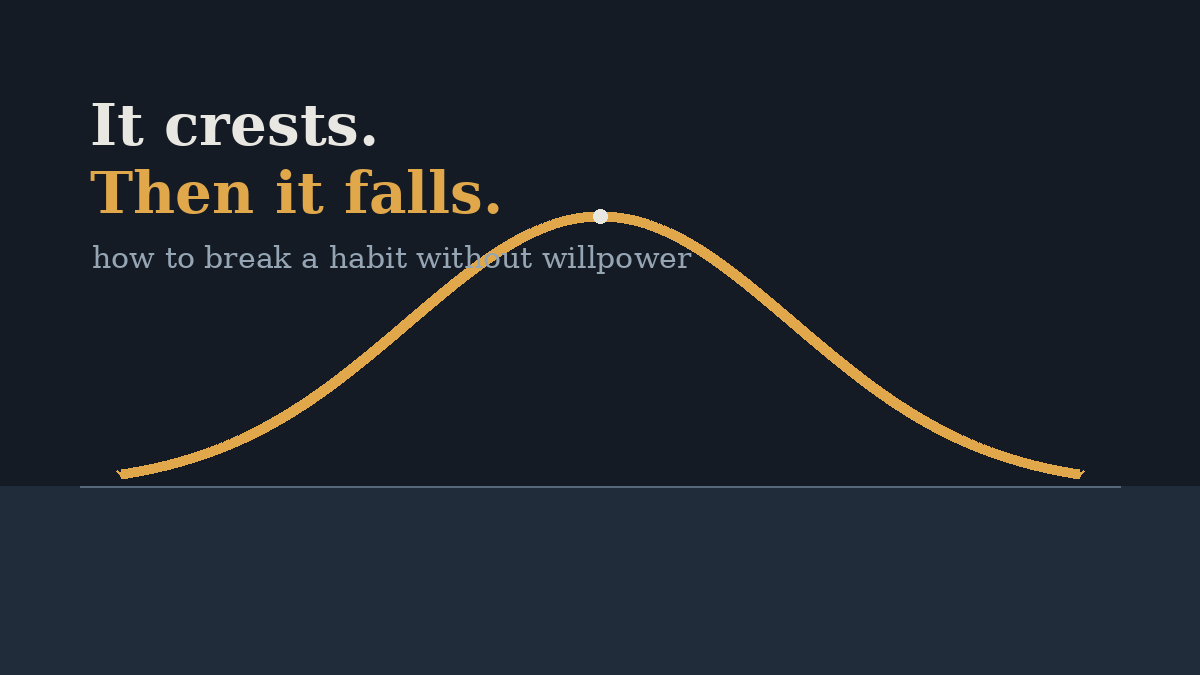
It crests, then it falls
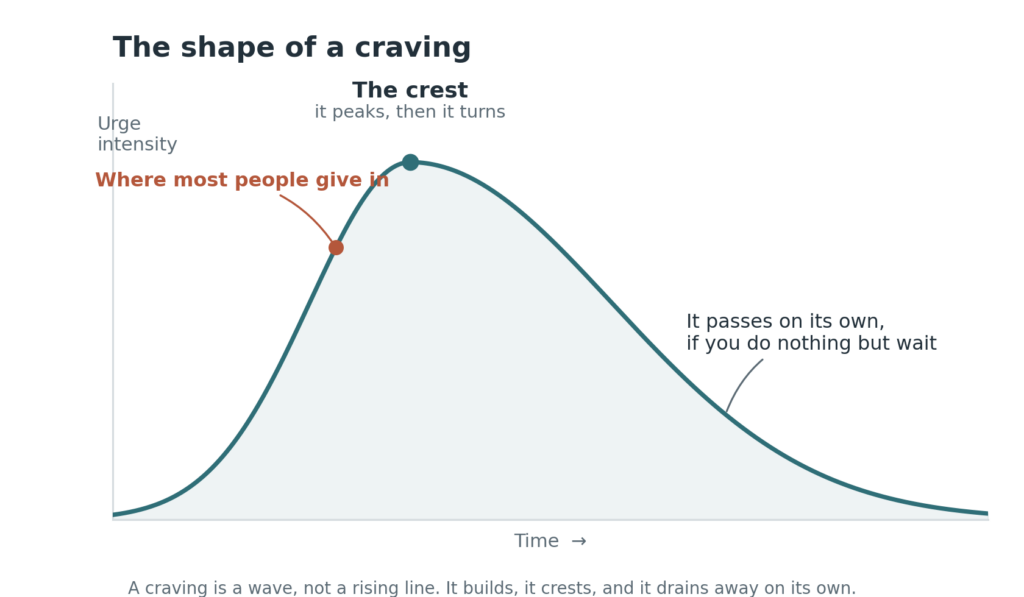
G. Alan Marlatt ran the Addictive Behaviours Research Center at the University of Washington until his death in 2011, and he spent decades watching people try to quit properly hard things. He noticed a pattern and gave it a name that has outlived him: urge surfing.
The idea is almost embarrassingly plain. An urge isn’t a line climbing forever until it crushes you. It’s a wave. It rises, builds, hits a messy crest, and then — if you do nothing but stay upright and breathe — it breaks and rolls back out.
What surprised him was who relapsed. Not the people with the fiercest urges. The ones who panicked near the bottom of the wave: they felt the water at their ankles, assumed it would keep rising until it drowned them, and gave in to make the waiting stop. The urge doesn’t climb forever. It crests. That’s most of the secret, and it’s why the whole thing is named after the one moment that matters.
How to break a habit at nine o’clock on a Tuesday
Philosophy is useless until it survives a quiet house and a long day. So when the house has gone quiet, you’re spent, and the habit starts calling — the extra drink you didn’t mean to pour, the phone glowing in the dark, the snack you’d sworn off — what do you actually do? Here’s how to break a habit without becoming a better person than you already are. Four moves.
- Name it. The second the urge lands, say it out loud in flat, boring words: this is the wave, it’s rising, it’ll peak and pass. Naming it shifts you from inside the urge to just outside it — from thrashing in the water to standing on the harbour wall watching the sea churn.
- Open your hand. Literally. Your body braces for a fight without asking permission, so reverse it: unclench your jaw, drop your shoulders, turn your palms up on your lap. The body leads the mind more often than we like to admit, and a body that has stopped bracing sends a calmer signal back up. You can’t sustain a fight for long. You can sustain a wait.
- Shrink the change until it’s almost nothing. Kaizen, in your living room. Don’t vow to never do the thing again — that’s the weekend rebuild, and it fails like they all do. Put one small piece of friction in the way and make it laughable. Delay two minutes by the clock. Not two hours. Two minutes is small enough that the animal part of your brain never sounds the alarm. Tomorrow, three. Then four.
- Fill the hole it leaves. Every bad habit was solving something before it became the problem — stress, boredom, the loneliness of a late evening. Take it away and you leave a gap, and gaps rarely stay empty; something worse tends to move in. Drop something deliberate into the same slot at the same time of night: a fussy herbal tea, a stretch, a chapter of a novel you can’t put down.
None of this is heroic. It won’t cut together into a montage, and that’s the point. The plants that survive aren’t the ones running on heroics; they’re the ones running on small, dull, repeatable things that hold when everyone is tired.
The urge will still come some evenings. You’ll feel the old heat climb in your chest. This time you name it, you open your hand, and you watch the gauge. It reaches its crest, and then, as it nearly always does, it falls. You didn’t out-muscle it. You just stopped being the thumb on the spring. That, more than any amount of willpower, is how you break a habit for good.
Which habit would you point this at tonight, and what would you put in the hole it leaves? Tell me in the comments. The replacement is where most people come unstuck. If this bought you back an evening, you can buy me a coffee on Ko-fi, where the decision kits and field cards live too.