I found a blue Post-it stuck to the inside cover of a notebook I abandoned around 2011. Marcus Aurelius, I think. Something about the obstacle becoming the path. I had pressed the ballpoint hard enough to dent the paper underneath. Clearing out a spare room last month, shifting damp cardboard boxes and old coats, I read the quote again. I felt nothing. No spark. It was like finding an expired gym card in a pocket—a receipt for an intention I paid off the second I wrote it down.
There are other lines—the uncomfortable quotes—that function differently. I haven’t written them down. I don’t trot them out in meetings. Yet I’ve been losing a quiet argument with a handful of them for twenty years. One usually shows up uninvited when I’m staring at the steering wheel in a supermarket car park. Another surfaced the night before I took a job I wasn’t sure I wanted, pacing the kitchen linoleum at 2 AM, trying to talk myself out of it.
Marcus Aurelius is a better writer than the authors of these stubborn lines. But the Stoic quote went in the bin because it agreed with me.
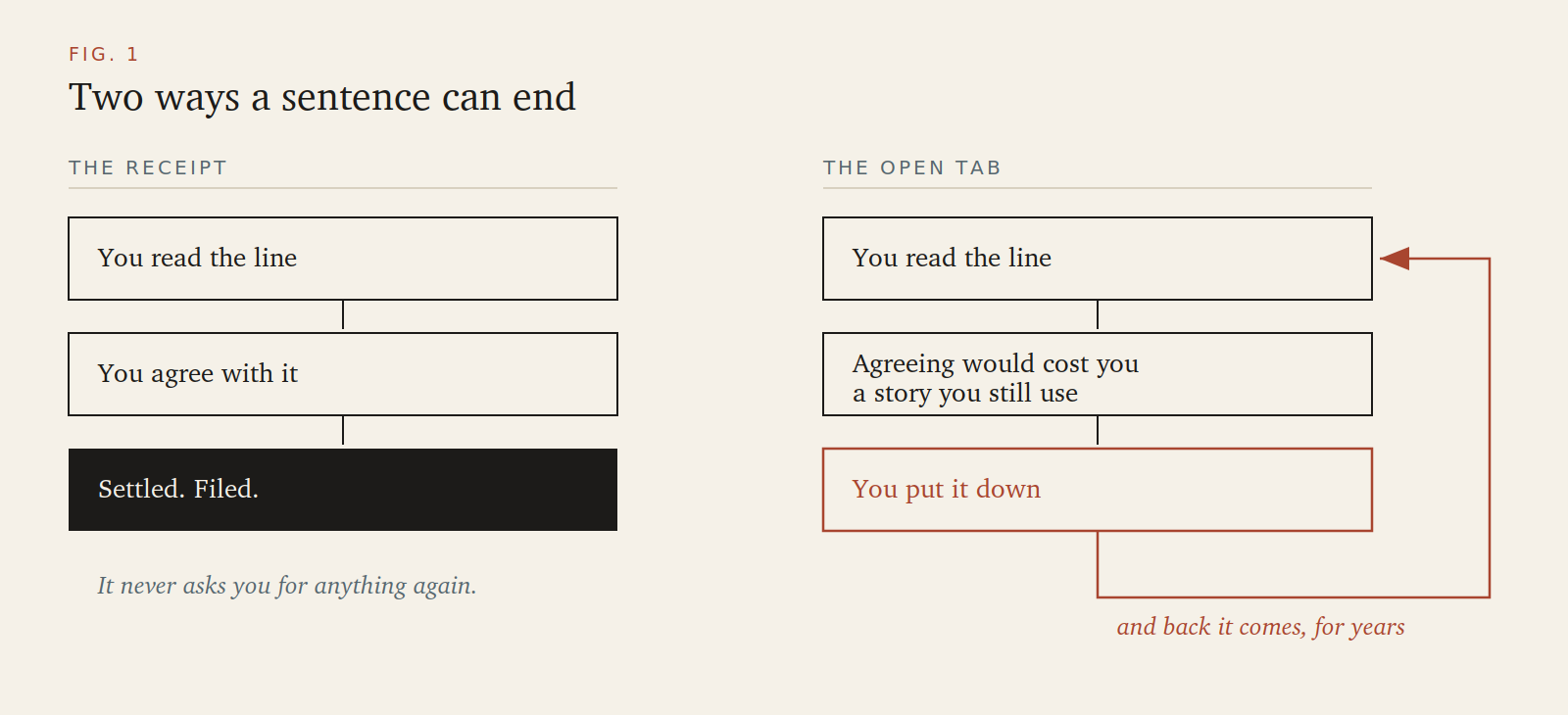
Reading a quote and feeling a warm click of validation usually means a transaction just completed. Filed and settled. Revisit that highlighted sentence in a decade and it won’t tell you anything you didn’t already believe. We shop for evidence to support the people we currently are.
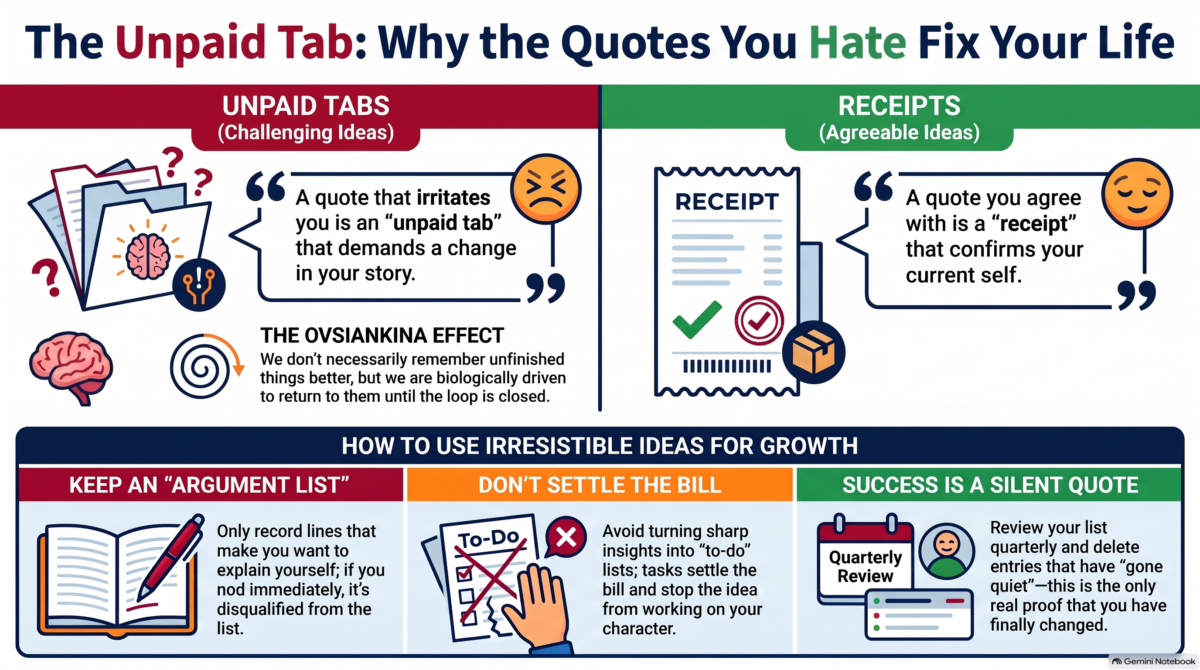
A few rare sentences refuse to settle. Agreeing with them would cost something—usually a comforting story I use to justify stalling or snapping at my family. So I try to walk away. But the words sit there, accruing interest, like an unpaid tab at a pub. The receipts fill up dusty notebooks. The unpaid tabs I can recite from memory.
The loop that will not close
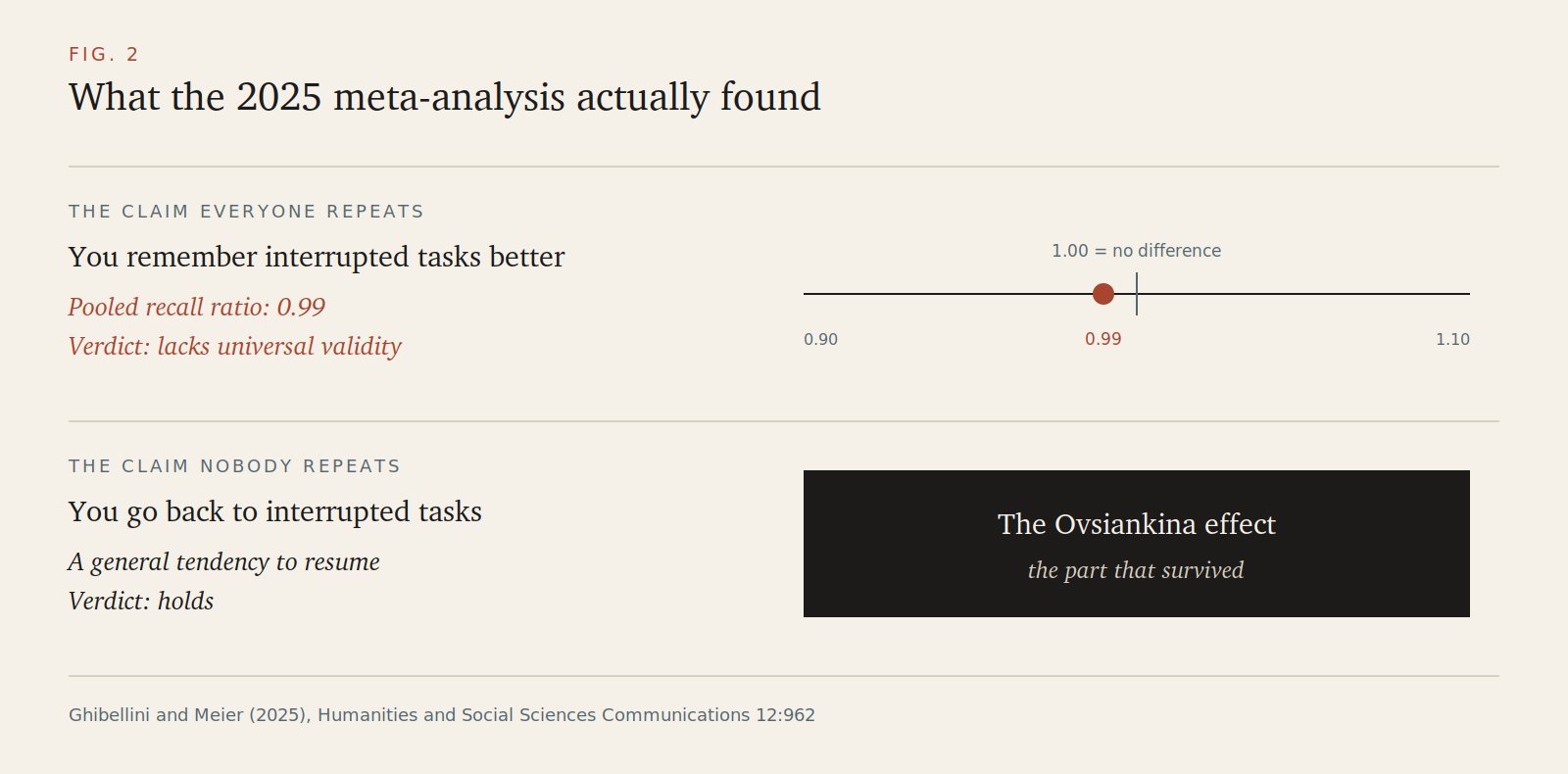
In the late 1920s, psychologist Kurt Lewin watched a waiter manage a busy Berlin café. The man could hold complex orders in his head, navigating multiple tables. Once the cash changed hands, the memory vanished. His student, Bluma Zeigarnik, tested this in 1927. She gave people small puzzles, interrupting a portion of them. Subjects seemed to recall the interrupted tasks better.
Productivity blogs sell this as the Zeigarnik effect: start a task, create an “open loop,” and your brain will force you to remember it.
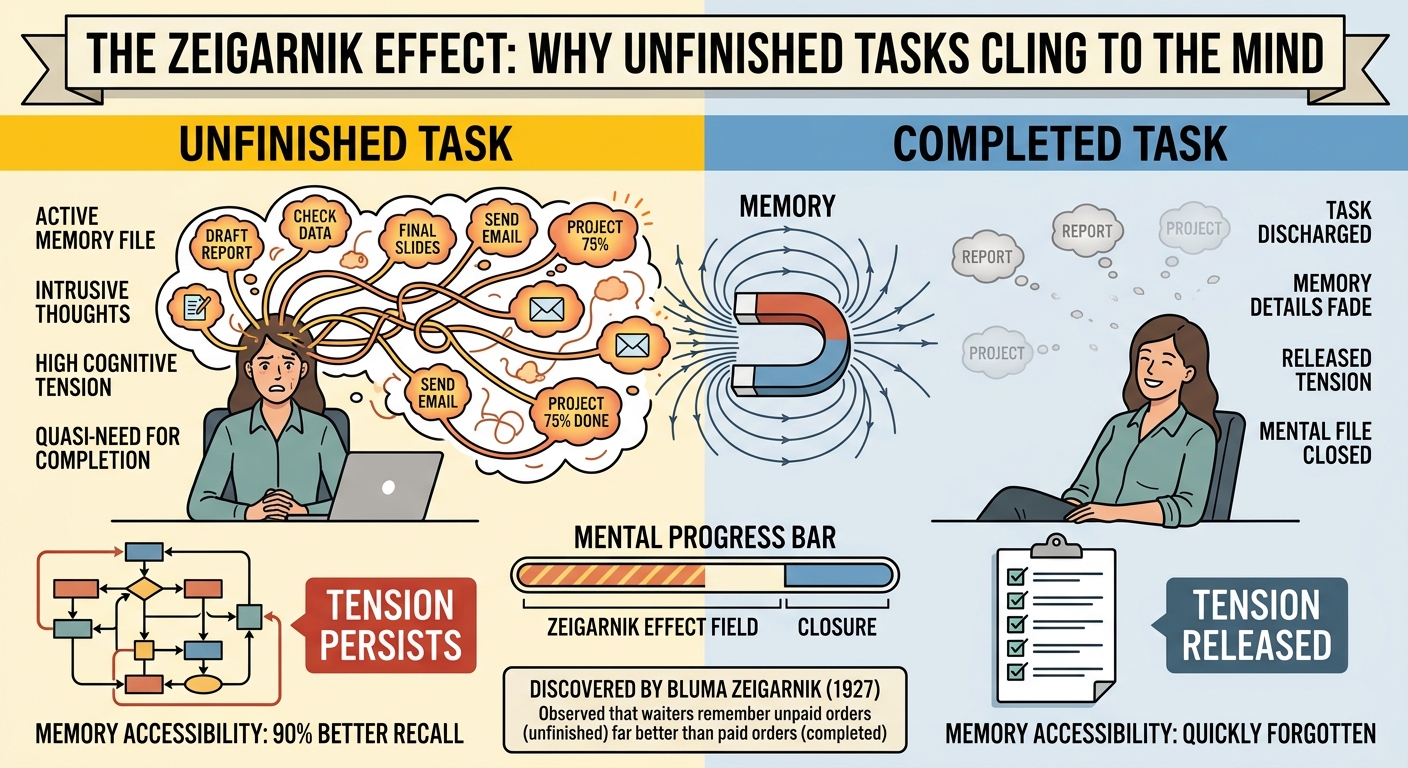
But in 2025, researchers at the University of Bern published a rigorous meta-analysis of the phenomenon. They pooled decades of data on interrupted versus completed tasks. The recall ratio was 0.99. A statistical flatline. The idea that unfinished things stick in your memory better is largely a myth.
Something else did survive that data pooling, though. The Ovsiankina effect. It bypasses memory entirely. It’s a behavioral compulsion to return to a task you were interrupted in the middle of. The uncomfortable truth you read and rejected isn’t sitting in your head being profound. It pulls you back because the loop remains open.
Five uncomfortable quotes I keep losing to
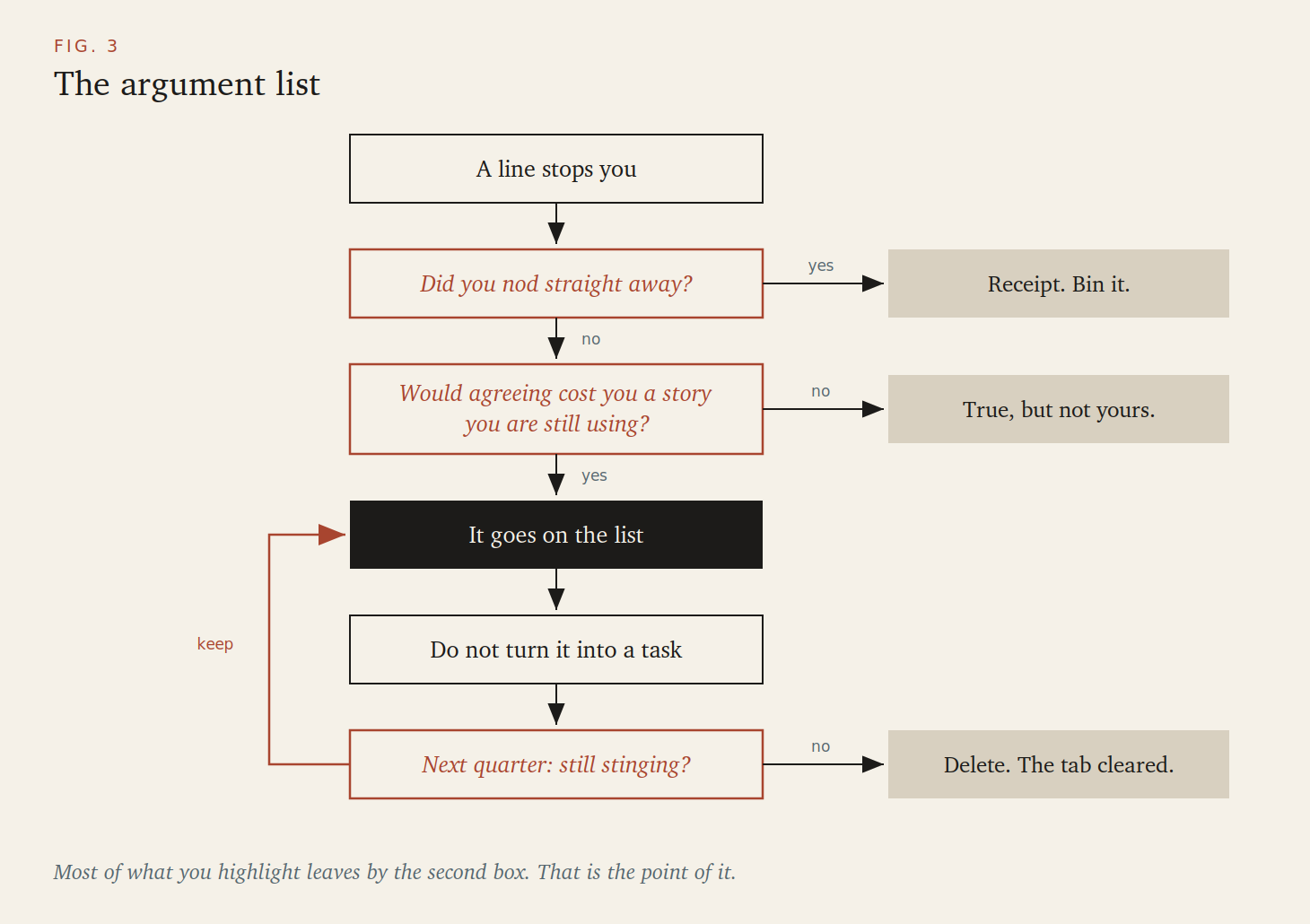
We suffer more often in imagination than in reality. — Seneca
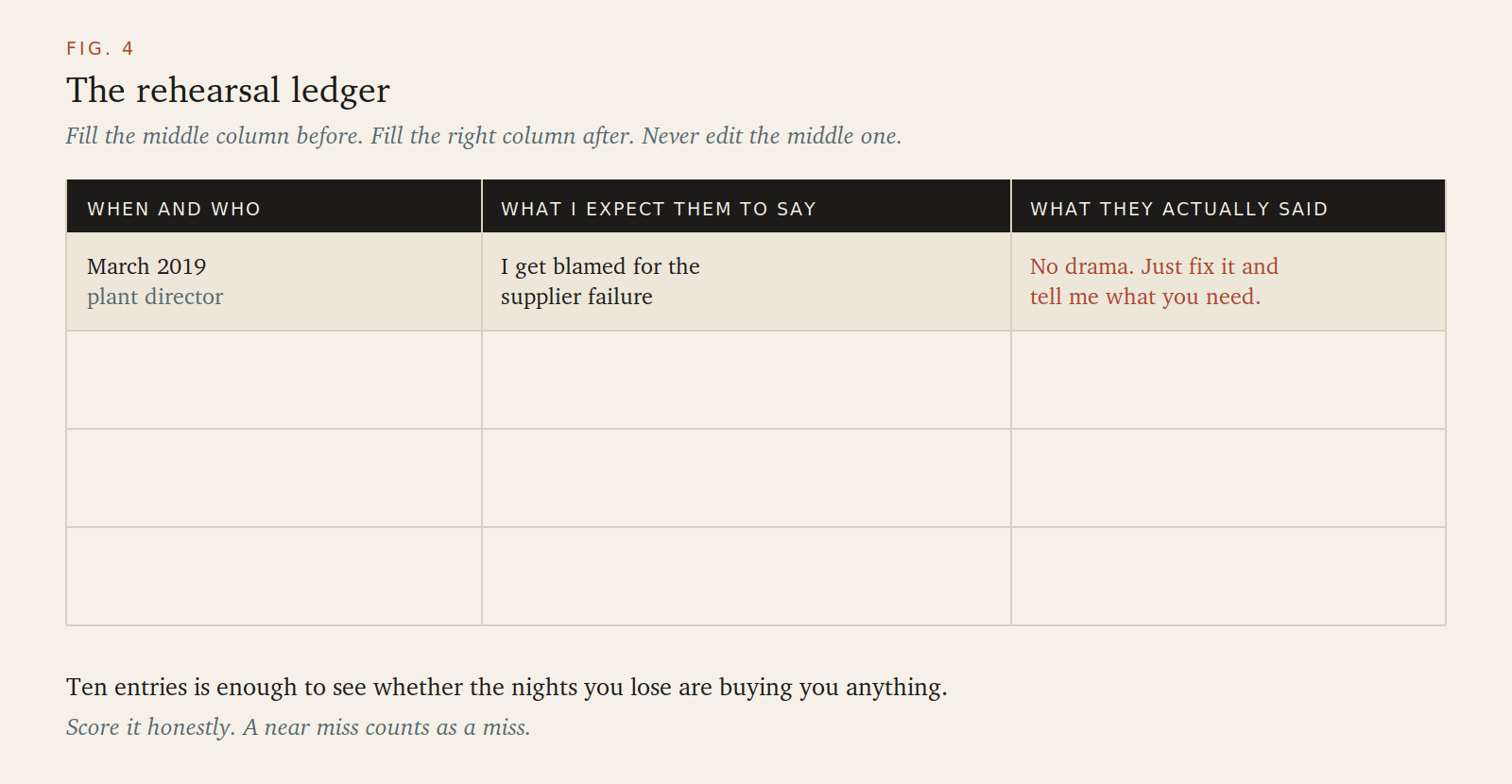
When I first read this, I felt vaguely insulted. It diagnoses a flair for drama, which is hard to deny when caught indulging it. I once spent days physically braced for a meeting with my boss. I took long showers having imaginary, defensive arguments. I lost sleep convinced I’d be fired over a problem I hadn’t caused.
I walked into his office with my jaw locked. He looked up and said, “No drama. Fix it and tell me what you need to get the line moving.” I left feeling drained. The body pays for rehearsals as if they were performances. When my chest gets tight now, I try to ask a blunt question: Is this happening right now, or am I rehearsing?
Work expands so as to fill the time available for its completion. — C. Northcote Parkinson
Parkinson wrote this as dry satire about the British civil service in 1955. Stripped of its modern time-management gloss, it stings. The sheer volume of my effort rarely indicates the difficulty of the work. It mostly shows how much room I gave it to breathe.
I ran a corrective-action cycle for a customer audit in 2022. We allocated eight weeks. Those weeks filled up with status meetings, color-coded spreadsheets, and bloated email chains. Then a logistical crisis on the client’s end pulled the deadline forward by ten days. We stripped out the noise and finished in four days. The actual output didn’t suffer. The engineering wasn’t tighter when we had two months; it just got exhaustively discussed. Give a job a fortnight and it finds a fortnight’s worth of bureaucratic reasons to remain open.
No man ever steps in the same river twice, for it is not the same river and he is not the same man. — Heraclitus
You accumulate firm positions as you age. I built a concrete view of what I was naturally good at, formed on a highly emotional afternoon, and spent a decade defending it. In 2007, I turned down a promotion because I decided I wasn’t “management material.” I held that rigid line for years, mostly because reversing the decision meant admitting the earlier version of me had been wrong.
He was. The man who made that call in 2007 had inferior information and a fragile ego fueled by imposter syndrome. (My wife still brings up the ‘technician, not a politician’ speech I gave her that night over cheap Indian takeaway). I owed consistency to my family and my ambitions. I didn’t owe loyalty to the guy who last had all the facts.
You will become as small as your controlling desire; as great as your dominant aspiration. — James Allen
James Allen’s language is slightly archaic, which might be why it bypassed my defenses. Reading it as a clinical diagnosis rather than inspiration changes the focus. Look at a calendar. If the unspoken organizing principle of my week is “not looking foolish in front of the people I answer to,” or “keeping the peace at home on a Sunday morning,” then that avoidance sets the ceiling. The thing I structure my life to avoid becomes the metric of my limitations. I still don’t like this quote.
Until you make the unconscious conscious, it will direct your life and you will call it fate. — Carl Jung
This is the tab I haven’t fully paid. It refuses to let me have a rough patch. It demands I look at the macro-pattern. The same interpersonal argument manifesting in three different jobs. The usual fortnight of paralyzing avoidance before every hard financial call. The self-sabotaging sequence I’ve run since I was seventeen, conveniently described as “bad circumstances.”
Accepting it means accepting culpability for the wreckage. My ego fights it. I haven’t been able to put it down. And according to the University of Bern researchers, that unresolved tension is why I keep going back to it.
How to make a quote work on you
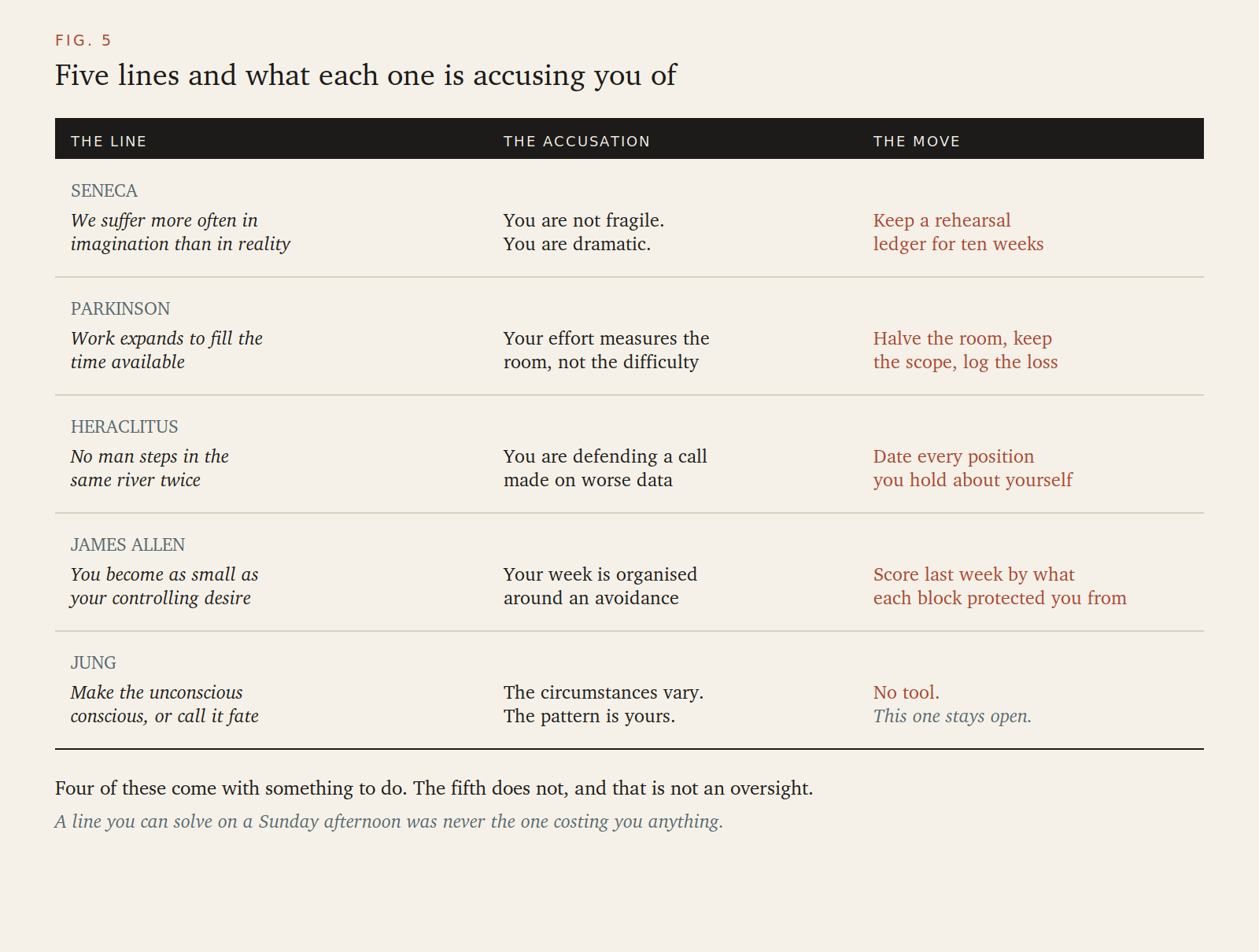
Changing how you consume information alters this dynamic. Keep an argument list. When reading a piece of advice or critique, gauge the physiological reaction. If you nod enthusiastically, it goes unrecorded. It will ask nothing of you.
Write down the lines that irritate. The ones that feel like a slight. Refuse to turn them into an action plan or a neat Sunday checklist. Tasks settle the bill. The moment a philosophical confrontation becomes a to-do list, the cognitive loop closes and the idea stops working on you. Let the tension sit there.
Review the list every few months. Over time, certain quotes go quiet. They stop irritating. You can read them without flaring up. Delete them. That silent neutralization is reliable evidence of behavioral change.
I threw the Marcus Aurelius quote in the bin along with a dead pen and some crumpled wrapping paper. It paid its dues in the two seconds it took me to write it down thirteen years ago and briefly feel profound.
The Jung line is still open. The loop remains unresolved. It will probably outlast me. Based on the last twenty years, that tension is the reason it does me any measurable good.
If these uncomfortable quotes landed, you might want I Stopped Renting My Own Mind (a Dead Emperor Fixed It for Free) and Kierkegaard Named Your Anxiety in 1844.