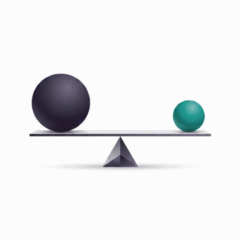
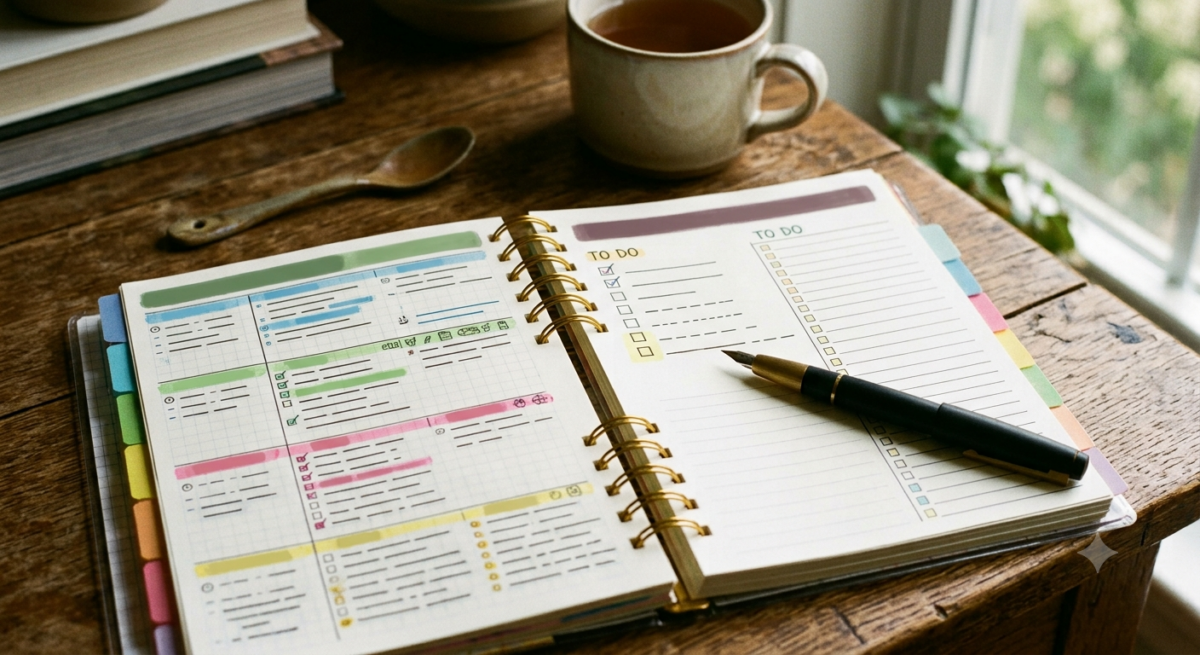
My productivity system was the most elaborate thing I owned. Last January I rebuilt my entire task manager from scratch, and it was the most productive I felt all month.
I finished nothing.
This started as an essay on Medium — this is the fuller version, with the receipts.
The planner was beautiful. It was also the reason I missed the deadline.
I’d spent the better part of a Sunday on it. Colour-coded tags, a nested structure I’d copied off a tutorial, databases that linked to other databases like a private intranet for a company of one. By four in the afternoon I had a productivity system that could have run a mid-sized charity.
What I did not have was the single client proposal I’d sat down to write at ten that morning. Forty minutes of real work. Less, if I’d stopped fiddling.
I closed the laptop with the warm, specific glow of a day well spent.
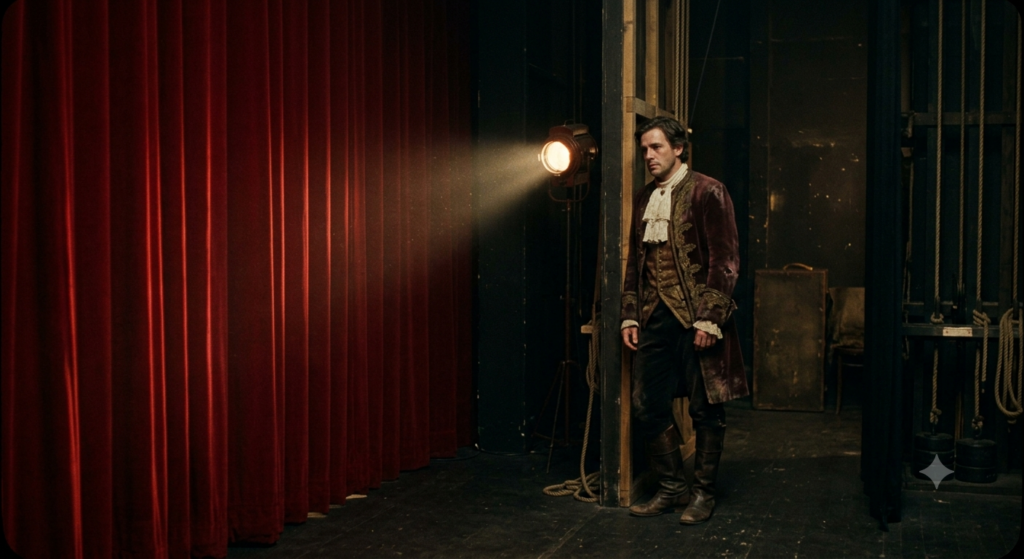
It took me until the next morning—staring at the blank proposal with the deadline now sitting on my chest—to work out what had actually happened. I hadn’t worked. I’d built the set, hung the lights, pressed the costumes, and gone home before anyone walked on stage.
I’d spent the entire day doing rehearsal work.
The work that looks exactly like the work
Rehearsal work is any task that gives you the full bodily experience of being productive while producing nothing you could hand to another human being.
It feels like work because it is effortful. You concentrate. You make decisions. You finish the afternoon tired in the right way, and every neurological signal your brain uses to detect “I did something today” lights up green. The only thing missing is the thing itself.
This isn’t a character flaw. Your brain scores a day by effort and decisions, not by output, and rehearsal work is dense with both. You made forty small choices about tags and templates, and each one paid out a tiny, legitimate hit of completion. By evening you’ve banked a hundred of those hits, and not one of them required you to be any good at your actual job.
The reward system can’t tell the difference between progress and the convincing costume of progress. It just counts the choices.
It isn’t only planners, either:
- The Runner who spends a fortnight researching the biometric accuracy of four different GPS watches and never runs.
- The Novelist with an immaculate, three-tiered Scrivener folder structure and zero drafted chapters.
- The Product Team that spends three weeks designing the sprint methodology for the project, rather than building the project.
Different costumes; same empty stage.
Here is the cruelest part of the dynamic: rehearsal work is fundamentally more pleasant than real work, which is precisely why it keeps winning.
Real work contains a horrible little moment where you produce something bad and are forced to look at it. The clumsy first draft. The pitch deck whose opening value proposition reads like it was translated into English by someone falling down a flight of stairs. Building the system never asks you to survive that moment. Setup is all promise and zero exposure. You get the sensation of momentum without the liability of being judged, because technically, nothing has been made yet.
The set is always more comfortable than the stage.
“Nobody gets judged for the system they built. That is the entire appeal.”
Perfectionism is fear with good posture
For years I told myself this was just professional thoroughness. Good craftspeople prepare. Sharpen the axe, measure twice.
Then I read a piece of experimental psychology that took the excuse off the table.
In the late 1970s, psychologists Steven Berglas and Edward Jones ran a now-classic study on a peculiar human habit: people sabotaging themselves on purpose. They arranged for participants to succeed at a test in a way that left the subjects privately unsure they could ever repeat the performance. Then, before Round Two, the researchers offered them a choice of two supplemental drugs: one framed as a performance enhancer, the other framed as something that would actively disrupt their cognitive focus.
A staggering number of the participants—specifically the ones with the most fragile grip on their new “success”—reached for the thing that would hamper them. Offered a built-in excuse, they took it. Berglas and Jones named the phenomenon self-handicapping.
Once you have the vocabulary for it, your own Sunday afternoons stop looking so innocent.
An unfinished productivity system is the most socially acceptable handicap ever invented. If the freelance proposal lands badly? Well, my CRM wasn’t properly dialed in yet. If the essay fails to find an audience? The capture-workflow was fighting me. You never have to find out the limits of your actual capability, because you stubbornly refuse to arrive at the hour of the day where those limits get measured.
The endless rebuild isn’t a devotion to excellence. It is an insurance policy against being found ordinary.
And the tragedy of the trap is that the better you are at your job, the worse you have it. People who have never been praised for their output don’t need an elaborate labyrinth to hide inside. It is the reliably competent—the ones with a reputation to protect, the “I don’t put my name on anything that isn’t right” crowd—who construct the most impenetrable sets. The handicap scales with the fear, and the fear scales with how much you have to lose.
(That specific realization took me about six months to forgive myself for. It remains the single sentence in this post I would most prefer to be a lie).
Three ways to catch yourself rehearsing
You can catch rehearsal work in real-time, provided you know the physiological tells:
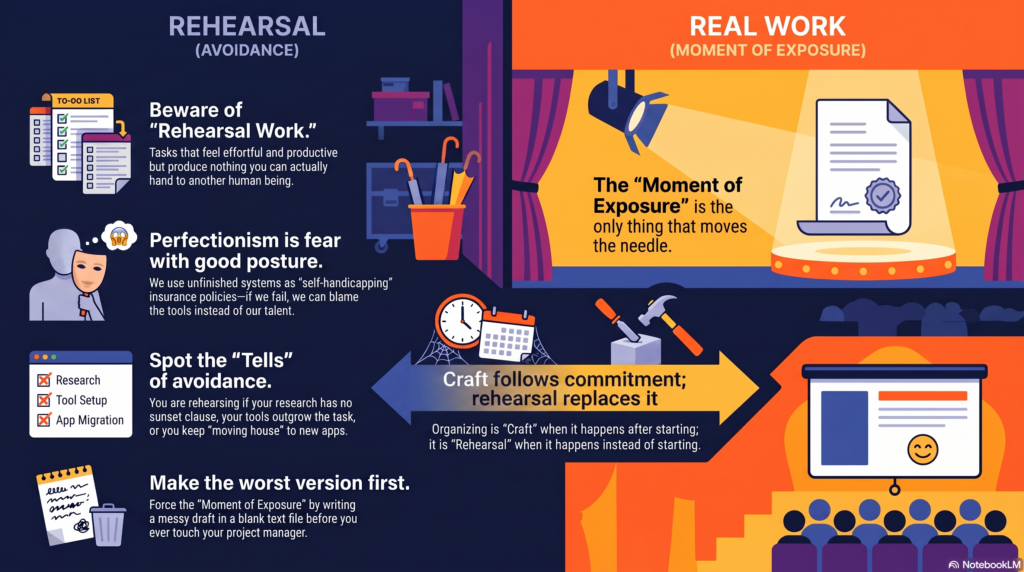
- The tool outgrows the task. You sat down needing to send three awkward emails. You are now thirty minutes into reading a Reddit thread comparing the API latency of two different desktop mail clients. The scaffolding has grown wider than the building it was designed to hold up.
- The research has no sunset clause. You have read nine introductory guides on how to launch a newsletter. You have launched zero newsletters. Real research ends the exact second you possess enough information to take an uninformed risk. Rehearsal research ends when your eyes get tired.
- You keep moving house. You migrate your life to a new app every ninety days, always abandoning the old one for the exact same stated reason: “It got messy.” But messy just means inhabited. The notes had typos in them; the tags got compromised by real-world exceptions. You aren’t upgrading your stack; you are fleeing the crime scene. A fresh, blank onboarding screen holds zero evidence of your past procrastination.
That last one stings, doesn’t it? We don’t quit software when it fails us. We quit software the precise afternoon it fills up with historical proof that we actually tried.
In fairness: sometimes the system is the work
I am not a digital Luddite. A surgical team lays out its Mayo stand with obsessive, rigid geometry, and that geometry is an inseparable component of saving the patient’s life.
The diagnostic test to separate the two is uncomfortable, but highly accurate:
| The Action | When it is Craft | When it is Rehearsal |
| Organizing | Arranging the workspace after committing to the project | Arranging the workspace in place of starting the project |
| Researching | Gathering the specific data point needed for Paragraph 4 | Reading broad philosophy to simulate the feeling of writing |
| Upgrading | Replacing a tool that physically broke under heavy volume | Abandoning a tool because looking at your old tasks causes friction |
Preparation that follows commitment is craft. Preparation that replaces commitment is just procrastination wearing a high-vis jacket. Identical physical motions; fundamentally opposite vectors.
The fix is uglier than you’d like
The solution to a broken system is almost never a slightly more optimized system. The solution is to force the work to happen too early for the system to catch it.
- Make the worst version first. Before you open your project manager, generate the raw deliverable in the stupidest digital container available to you. Write the rough chapter in Apple Notes. Type the bad proposal into a bare
.txtfile. You are not trying to do good work; you are trying to drag the Moment of Exposure to 9:15 AM, where an afternoon of tidying can’t retroactively bury it. Once the ugly draft exists in the world, the rehearsal loses its primary function. - Put setup on a hard kitchen timer. Give your system-building ten minutes. Set an audible, obnoxious phone alarm across the room. When it rings, the tool is finalized in whatever half-baked state it happens to be sitting in. The external constraint does the heavy lifting that your internal discipline won’t. It pulls the fire alarm on the rehearsal.
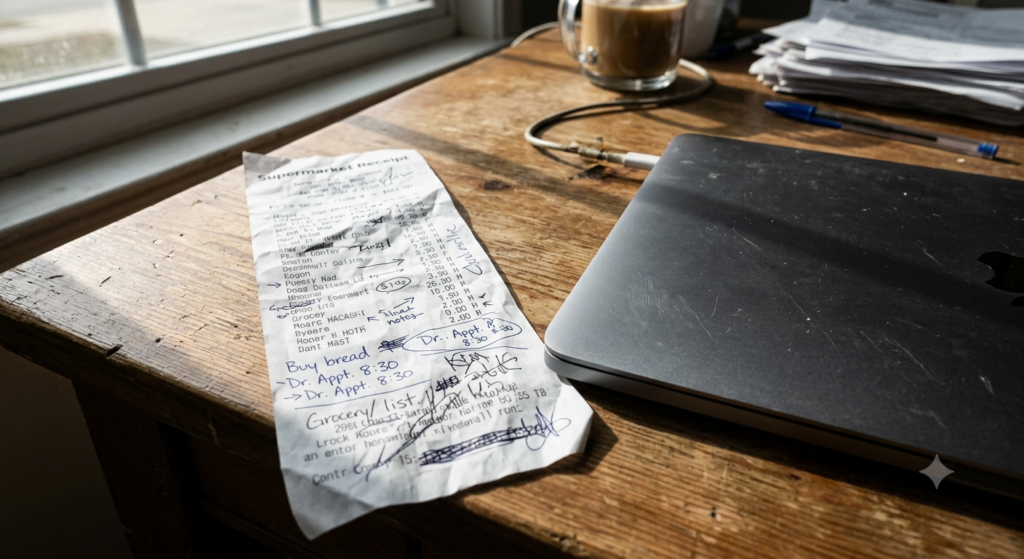
- Aggressively demote your software. The more powerful an application claims to be, the more square footage it offers you to perform the pantomime of work. Most of my actual output over the last twelve months was generated inside one chaotic, un-indexed Google Doc and on the back of a creased supermarket receipt. A blank white page cannot be optimized. That is its supreme feature—the same logic behind via negativa, the ancient mental model that cures modern distraction. It offers your brain zero digital knobs to twist, leaving you with only one remaining option: typing.
What the machine age does to all this
There is a distinct, late-2020s edge to this trap that deserves its own warning label.
We have arrived at an era where it has never been easier to confuse arranging information with digesting it—a quiet cognitive tax that leaves your brain leaner as your output gets faster. You can feed forty messy PDF whitepapers into a Large Language Model and ask it to generate a clean, bulleted, perfectly categorized markdown taxonomy. When it spits that taxonomy back out at you ten seconds later, your brain registers a hit of earned competence that feels 98% identical to having actually read the whitepapers.
The digital theatre has never been cheaper to rent. The stage lights have never been brighter. But the machine cannot walk out and take the bow for you.
Last month I caught myself typing a prompt asking an AI to “help me structure my core thesis” for an essay I hadn’t actually generated a single private thought about yet. The AI returned a crisp, highly logical five-part outline. It looked authoritative. But the thinking hadn’t occurred; I had simply paid a server farm in Iowa to build me a nicer backdrop.
The psychological reflex that drives us to spend $120 on a hyper-relational Notion template, and the reflex that drives us to outsource our rough ideation to an LLM, are the exact same muscle: the desperate wish to arrive at the finished artifact without having to pass through the friction that creates it.
But the friction was never blocking the work. The friction was the work.
Back to the beautiful planner
[IMAGE 4: THE CURTAIN CALL]
- Alt Text: A theatre curtain rising on an empty stage with warm light beyond it.
- Caption: At some point the set is finished, the lights are hot, and there is nothing left to do but walk out and be seen.
- Prompt:
View from a darkened stage as a heavy theatre curtain begins to rise, warm golden light spilling in from beyond it, a single empty chair centre stage, cinematic, hopeful, atmospheric, no text.
The client proposal got written, by the way. If this pattern sounds familiar, it overlaps with what psychologists call procrastination, and it connects to ideas in The Analysis Paralysis Trap.
Not in the master workspace. I woke up at 6:30 AM the following morning, opened a standard Word document, wrote the entire pitch badly in one sweating, uninterrupted pass, fixed three glaring typos, and hit Send. Twenty-five minutes total. The task I had spent ten hours building a fortress to protect myself from took less time than I had spent debating the hex codes for my priority tags. The irony is that the same energy, pointed outward, is exactly how you productize your expertise instead of selling hours.
If the work is genuinely started and you want a structure that serves it instead of hiding from it, this is the 90-day operating system I now run.
These days my productivity system is almost embarrassingly plain. The paper planner is still sitting on the corner of my desk. I open it maybe twice a month. My real work lives inside a running text file so visually chaotic it would make a Swiss graphic designer weep—and that specific ugliness is the only hard evidence I possess that anything is actually being brought into the world.
If this hit a nerve: the 90-day operating system turns it into a daily practice, and the Flinch Gap journal is built for running the reps.
The set was magnificent. But the audience bought tickets for the play. At some point, you have to turn the working lights off, step out of the wings, and let somebody watch you miss a note.
- The Comments are open: What does your personal hiding place look like? Mine was a dedicated Notion sub-tag labeled
[META: Tasks I am avoiding by organizing my tasks]. Drop yours below so the rest of us know we aren’t down here alone.